

Singapore En Bloc Rules Under Review 2026: What Every Condo Owner Must Know
Government reviewing en bloc consent thresholds. Experts propose 70% for older developments.

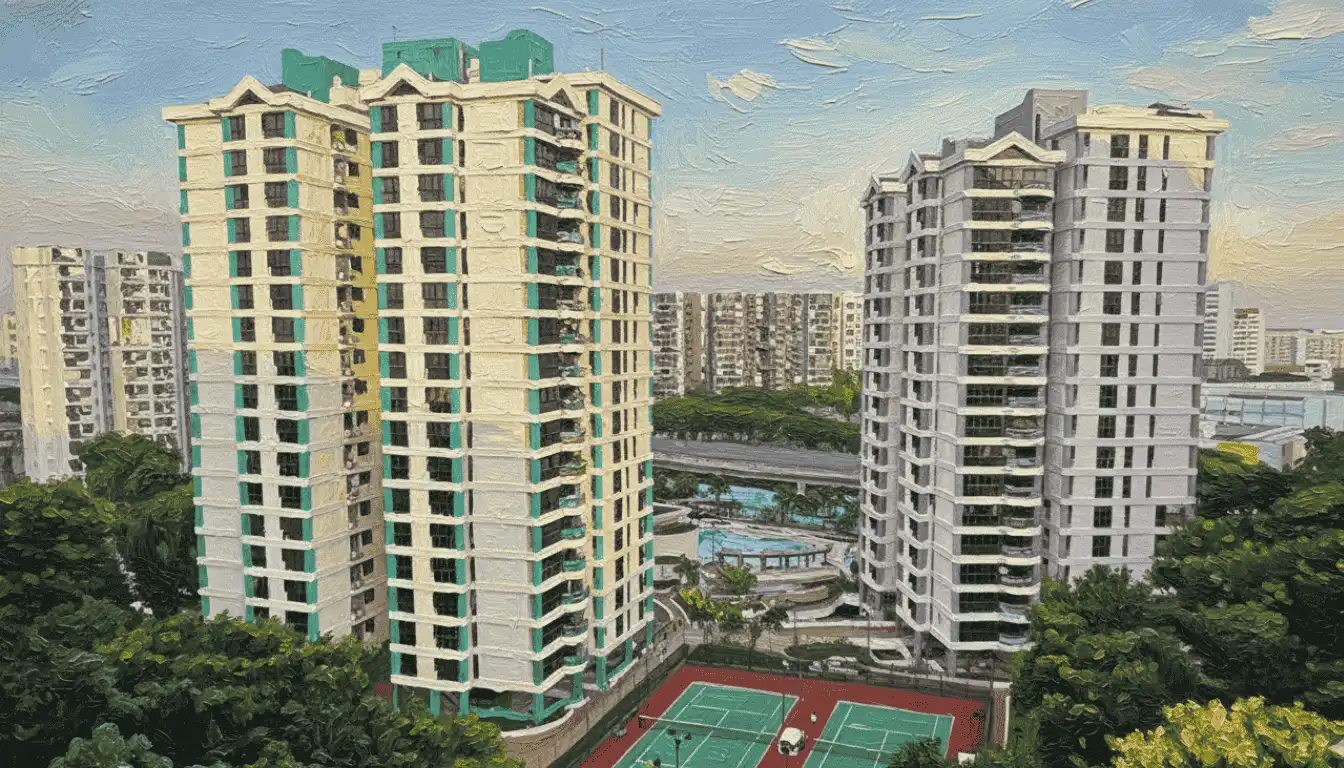
- Singapore is reviewing the Land Titles (Strata) Act consent thresholds—a potential game-changer for collective sales
- Current thresholds require 80% consent for 10+ years old, and 90% for younger developments
- Industry experts propose lowering to 70% for developments above 30 or 50 years old
- Only 2 residential en blocs succeeded in 2025: Chiku Mansions and River Valley Apartments (both freehold, 40+ years)
- The price gap is stark: condos under 20 years average $1,818 psf versus just $1,171 psf for those over 40 years
- Introduction: Why This Review Changes Everything
- What Are the Current En Bloc Consent Thresholds?
- Why Is Singapore Reviewing These Thresholds Now?
- What Changes Are Being Considered?
- Why Some Owners Oppose En Bloc Sales
- Will More En Bloc Tenders Mean More Successful Sales?
- How This Affects Different Property Owners
- The Legal Framework: What You Need to Know
- Preparing for the Outcome: A Practical Checklist
- Frequently Asked Questions
Introduction: Why This Review Changes Everything
For condo owners across Singapore, the words "en bloc" represent either a golden ticket or an unwanted eviction notice. The collective sale framework has remained largely unchanged since its inception, operating on a simple principle: secure enough owner consent, and the sale proceeds—even if some disagree.
Now, the government is reviewing whether these consent thresholds remain fit for purpose. According to Mark Yip, CEO of Huttons Asia: "It is good to review the policy so that rejuvenation and potential intensification of land use can take place. This is crucial in land-scarce Singapore."
The stakes are enormous. A successful en bloc can mean an additional $300,000 to $800,000 in your pocket. But for minority owners who want to stay, no premium compensates for the disruption of forced relocation.
Whether you're hoping for an en bloc windfall or dreading displacement, this review demands your attention.
What Are the Current En Bloc Consent Thresholds?
Under the current Land Titles (Strata) Act framework, a collective sale requires:
| Development Age | Consent Required |
|---|---|
| 10 years or older | 80% by share value AND strata area |
| Less than 10 years old | 90% by share value AND strata area |
The age is calculated from the date of issue of the latest Temporary Occupation Permit (TOP) or Certificate of Statutory Completion (CSC)—whichever is later.
The Dual Requirement Explained
Both share value AND strata area conditions must be met. This protects owners of larger units from being outvoted purely by number, and smaller unit owners from being outvoted purely by share value.
As Norman Ho, senior partner at Rajah & Tann Singapore explains: "Having a lower threshold would avert a situation where many major strata owners (like those with ownership of car park lots with about 20% ownership) blocking the collective sale exercise."
Why Is Singapore Reviewing These Thresholds Now?
The Ageing Development Problem
Singapore faces a structural challenge: hundreds of private residential developments are approaching critical age thresholds. Older developments face mounting problems including escalating maintenance costs, structural deterioration, and insufficient sinking funds for major repairs.
Swee Shou Fern, head of investment advisory at ETC (a member of Realion Group), observes: "Revising the threshold could potentially help to gather the required number of signatures for the collective sale to proceed to the tender stage. A lower threshold – particularly for much older developments facing rising maintenance costs and structural deterioration – could help these estates move forward, especially where fragmented ownership has made it difficult to raise funds for upgrading."
The Price Gap Reality
The financial case for en bloc is stark when you examine the data. According to EdgeProp Market Trends (as at January 5, 2026):
| Property Category | Average PSF | 5-Year Growth (2020-2025) |
|---|---|---|
| 99-year condos ≤20 years old | $1,818 | 33.4% |
| 99-year condos >40 years old | $1,171 | 26.7% |
That's a 55% price premium for younger condos over older ones.
For resale condos islandwide from 2020-2025:
- Freehold average: $1,941 psf (up 27.9%)
- 99-year leasehold average: $1,705 psf (up 39.4%)
For new sale condos:
- Freehold average: $2,781 psf (up 26%)
- 99-year leasehold average: $2,595 psf (up 49.9%)
Owners of ageing developments watch their properties depreciate while newer launches nearby command ever-higher prices. A successful en bloc offers an exit from this decline.
The 2025 En Bloc Market: Nearly Frozen
The en bloc market has ground to a near halt. In 2025, only two residential developments were sold successfully via collective sale:
- Chiku Mansions – Freehold, over 40 years old
- River Valley Apartments – Freehold, over 40 years old
Compare this to 2017-2018 when over 50 collective sales totalled more than $17 billion. The 90% threshold has become an increasingly difficult hurdle.
What Changes Are Being Considered?
While the government has not announced specific proposals, industry experts have suggested several approaches:
Option 1: Lower Threshold for Very Old Developments
Norman Ho of Rajah & Tann suggests: "Developments that are 30 years or younger are still relatively new. However, the consent threshold should be lowered... a threshold of 70% for developments that are above 30 years."
He adds: "In this age of sustainability and ESG [environmental, social and governance concerns], it is pointless to speak of urban rejuvenation if the building is less than 30 years."
Option 2: Additional Tier for 50+ Year Developments
Swee Shou Fern from ETC proposes: "A tiered approach that applies a lower requirement only to significantly older developments could strike a better balance between enabling renewal and protecting minority rights."
She suggests: "An additional tier of 70% owners' consent for developments more than 50 years old will be helpful to facilitate the rejuvenation of older estates."
Possible New Framework Structure
| Development Age | Current Threshold | Ho Proposal | Swee Proposal |
|---|---|---|---|
| Under 10 years | 90% | 90% | 90% |
| 10-30 years | 80% | 80% | 80% |
| 30-50 years | 80% | 70% | 80% |
| Over 50 years | 80% | 70% | 70% |
Why Some Owners Oppose En Bloc Sales
A lowered threshold benefits owners who support the sale, but opposing owners face greater challenges in stopping it. Donald Goh, director of capital markets and investment sales at ERA, notes: "Their apprehension often stems from personal attachment to their homes or uncertainty about relocation. Ensuring that safeguards and fair compensation frameworks remain robust will therefore be important in addressing these concerns."
The Replacement Cost Nightmare
Rising property prices make replacement increasingly challenging. If you receive $1.5 million from an en bloc, can you actually find an equivalent home?
Additional costs to consider:
- ABSD (Additional Buyer's Stamp Duty): If the en bloc unit is an investment property, Singaporean buyers face 20% ABSD on their second property. Mark Yip notes: "If the property is an investment property, some owners may not reinvest in another property because of the higher ABSD on second or more property."
- Foreigner impact: With 60% ABSD for foreign buyers (doubled from 30% since April 2023), Yip observes: "The replacement cost of a home for a foreigner who owns a prime Core Central Region (CCR) home is extremely high. They may have to move to the Outside Central Region (OCR) if their development gets en bloc. Hence, they are not likely to vote in favour of an en bloc."
- Seller's Stamp Duty: For properties bought on or after July 4, 2025, the required holding period is four years with a 16% SSD rate if held under one year (decreasing by 4 percentage points for each additional year).
The 15-Month Wait Period for HDB
Former condo owners face a 15-month wait before they can purchase a resale HDB flat (introduced September 2022). Only senior citizens aged 55 and above are exempt when purchasing four-room or smaller flats.
This means most en bloc sellers cannot immediately downsize to HDB—they must rent during the waiting period, adding to transition costs.
Will More En Bloc Tenders Mean More Successful Sales?
Not necessarily. According to ERA's Donald Goh: "Market timing, pricing expectations, location, demand and supply will continue to play a critical role in whether a collective sale can be concluded."
Developer Caution in 2026
Singapore's GDP grew 4.8% year-on-year in 2025, driven by a strong 15% expansion in manufacturing. However, the Ministry of Trade and Industry projects slower growth of just 1% to 3% in 2026, citing:
- Impact of US trade tariffs on Singapore's trading partners
- Prevailing geopolitical tensions
- Weaker economic outlook globally
GLS Competition
Some developers may prefer Government Land Sales sites over en bloc opportunities. The clearer planning parameters, transparent bidding process, and more certain development timelines offer advantages that en bloc sites cannot match.
Swee Shou Fern summarises: "A lower threshold alone is not a silver bullet. Realistic pricing, a transparent process and an equitable apportionment framework remain key to building trust among owners and ensuring developers find the site viable."
How This Affects Different Property Owners
If You Own a Condo Under 10 Years Old
Current situation: 90% threshold applies—very difficult to achieve
Impact of review: Unlikely to see threshold reduction; your development is still "new"
Strategy: Focus on long-term value; en bloc potential is decades away
If You Own a Condo 10-30 Years Old
Current situation: 80% threshold, moderate en bloc potential
Impact of review: Changes unlikely to affect your threshold immediately
Strategy: Monitor your development's condition and MCST finances; understand neighbours' intentions
If You Own a Condo 30-50 Years Old
Current situation: 80% threshold, strong developer interest in well-located sites
Impact of review: Could see threshold drop to 70% under some proposals
Strategy: Engage actively with MCST; calculate your break-even scenarios; prepare for multiple outcomes
If You Own a Condo Over 50 Years Old
Current situation: Most affected by lease decay and maintenance challenges
Impact of review: Most likely to benefit from any threshold reduction
Strategy: Get building condition assessments now; participate in any en bloc discussions; understand your rights as both majority and potential minority owner
The Legal Framework: What You Need to Know
Sale Committee Formation
- Minimum 3 members, maximum 14
- Elected at general meeting with 30% quorum
- Must act in good faith for ALL owners, not just those in favour
Collective Sale Agreement (CSA)
- Valid for 12 months from first signature
- Must specify reserve price, apportionment method, terms
- All signing owners must receive copy
Strata Titles Board (STB) Process
If threshold is met but not 100%:
- Application to STB for collective sale order
- Objections period for dissenters
- STB evaluates if sale is in good faith
- Board may approve, reject, or impose conditions
Objection Grounds for Minority Owners
Valid grounds include:
- Transaction not in good faith
- Sale proceeds insufficient to buy equivalent property
- Financial loss for dissenter
- Breach of LTSA requirements
Preparing for the Outcome: A Practical Checklist
For Current Condo Owners
- Know your development's exact age and threshold status
- Attend AGMs and understand your MCST's financial position
- Calculate your personal break-even (purchase price + renovation + stamp duties vs current value + potential premium)
- Understand the replacement cost challenge (especially if investment property with ABSD implications)
- Consult a property lawyer on your rights as both majority and minority owner
For Prospective Buyers
- Don't pay a premium solely for en bloc potential—the framework may change
- Assess building condition independently before purchase
- Check if a CSA is already in progress
- Factor in stamp duties if you might need to rebuy after en bloc
- Understand the 15-month HDB wait period if that's your downgrade plan
Frequently Asked Questions
What happens if I refuse to sign during an en bloc?
If the required threshold is met and the Strata Titles Board approves the sale, you must sell regardless of your individual consent. You'll receive your share of proceeds as determined by the apportionment method in the CSA.
Can I object to an en bloc sale?
Yes, you can file objections with the Strata Titles Board. Valid grounds include bad faith, insufficient proceeds to buy equivalent property, financial loss, or procedural breaches. STB will evaluate objections before approving.
How long does an en bloc process take?
From CSA signing to sale completion, typically 18-36 months. Add another 12-24 months for development demolition and new launch. Total transition period can be 3-5 years.
Will the new thresholds apply to ongoing en bloc attempts?
This depends on transitional provisions that will be announced. Typically, CSAs already signed proceed under old rules, while new attempts follow new thresholds.
Does this affect HDB flats?
No. HDB collective sales (SERS—Selective En bloc Redevelopment Scheme) operate under completely different rules controlled by HDB. This review concerns only private strata-titled properties.
The Bottom Line
The en bloc threshold review represents a potential turning point for Singapore's property market. As Swee Shou Fern notes: "If adjustments to the threshold are made, we may see a gradual pickup in collective sale activity, especially among smaller to mid-sized residential sites... these are more manageable for developers – particularly in contrast to the larger GLS plots coming onstream."
Whether you're hoping for an en bloc windfall or concerned about protecting your home, the time to prepare is now. Understand your development's position, calculate your personal scenarios, and engage with your community. The outcome of this review will shape Singapore's property landscape for years to come.
Need help understanding how the en bloc review affects your property?
Jo helps Singapore homebuyers navigate the property market with data-driven insights and personalised guidance. Whether you're considering an en bloc opportunity or exploring resale options, she's here to help you make informed decisions.
Speak with Jo TodayJosephine Yap (Jo)
Associate Group Director
PropNex Realty
CEA License: R057586D
Disclaimer: The information provided in this article is for educational and general informational purposes only. Land price data and estimated breakeven figures are based on publicly available GLS tender results and market observations. Actual project pricing may vary depending on development costs, market conditions and developer strategy. This article does not constitute financial, investment, or legal advice. Buyers should conduct their own due diligence before making any property decision.
This article is for informational purposes only and does not constitute financial or legal advice. Market data sourced from EdgeProp Market Trends (January 5, 2026).
